
A Comprehensive Guide to Master’s Program Structures at the University of Chicago
As a world-leading research university, the University of Chicago—distinguished by its rigorous academic environment and top-tier faculty—has become a highly sought-after destination for international students pursuing graduate studies in the U.S. Many prospective master’s applicants to the university focus primarily on one key question: “How long does it take to complete a master’s degree at the University of Chicago?” Unlike institutions with rigid, standardized academic calendars, the duration of master’s programs at the University of Chicago varies depending on the specific field of study, program type, and mode of learning. While most programs fall within a general timeframe of one to two years, the duration of certain specialized programs may be extended; gaining a precise understanding of these academic timelines enables applicants to effectively plan both their academic and professional trajectories. The University of Chicago’s master’s programs predominantly span one to two years and are broadly categorized into two main types: academic and applied. These categories feature distinct academic timelines designed to cater to the diverse developmental needs of different students. Specifically, applied master’s programs emphasize the cultivation of practical skills; most follow a one-year (12-month) curriculum characterized by its intensity and targeted focus. These programs are ideally suited for applicants eager to enter the professional workforce quickly and are primarily concentrated within fields such as business and public policy. buy University of Chicago fake diploma, University of Chicago fake degree for sale, University of Chicago fake certificate sample, buy fake diploma, buy fake degree.
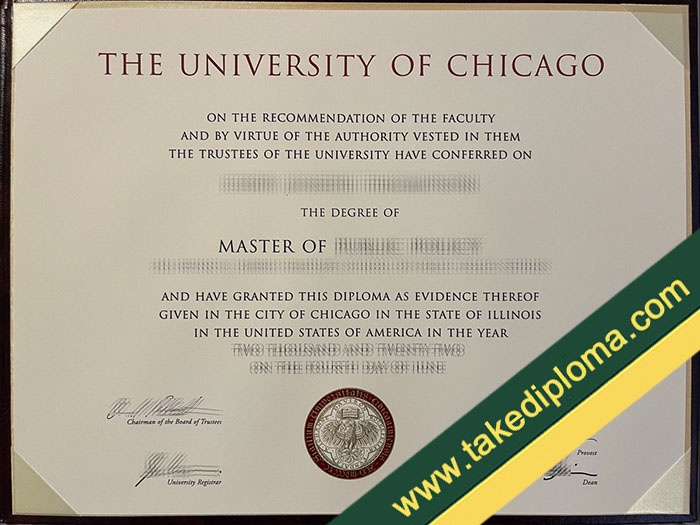
For instance, several applied master’s programs at the University of Chicago Booth School of Business—such as the Master in Finance and the Master in Business Analytics—have a one-year duration. Their curricula are structured around industry demands and do not require the submission of a lengthy master’s thesis; instead, students graduate upon the successful completion of coursework and practical projects, thereby aligning perfectly with the rapidly evolving needs of the finance and business sectors. Statistical data indicates that graduates of these one-year master’s programs demonstrate exceptional employment rates within six months of graduation; notably, 95% of Master in Finance graduates secure employment shortly after completing their studies, commanding an average starting salary of $115,000. In contrast, academic master’s programs prioritize quantitative research and the development of scholarly expertise. Most follow a two-year (24-month) timeline and are concentrated within the STEM fields and the humanities and social sciences—including disciplines such as Computer Science, Physics, History, and Sociology. These programs feature comprehensive curricula that, in addition to core coursework, require students to participate in laboratory research and academic seminars. Furthermore, students in certain disciplines must complete a master’s thesis or research report to successfully graduate, making these programs ideal for applicants planning to pursue a doctoral degree or embark on a career in academic research.
Beyond the specific field of study, the *type* of program selected also plays a significant role in determining the duration of a master’s degree at the University of Chicago. Certain specialized programs at this institution—such as dual-degree and joint-training programs—typically have a duration exceeding two years. This is because students are required to simultaneously fulfill the academic requirements for two or more degrees, necessitating the completion of more complex coursework and research tasks; consequently, the standard graduation timeframe generally ranges from 2.5 to 3 years. Furthermore, select programs within the fields of science and engineering allow students to apply for an extension of their graduation timeline—potentially extending it by up to three years—to facilitate in-depth engagement in research projects.